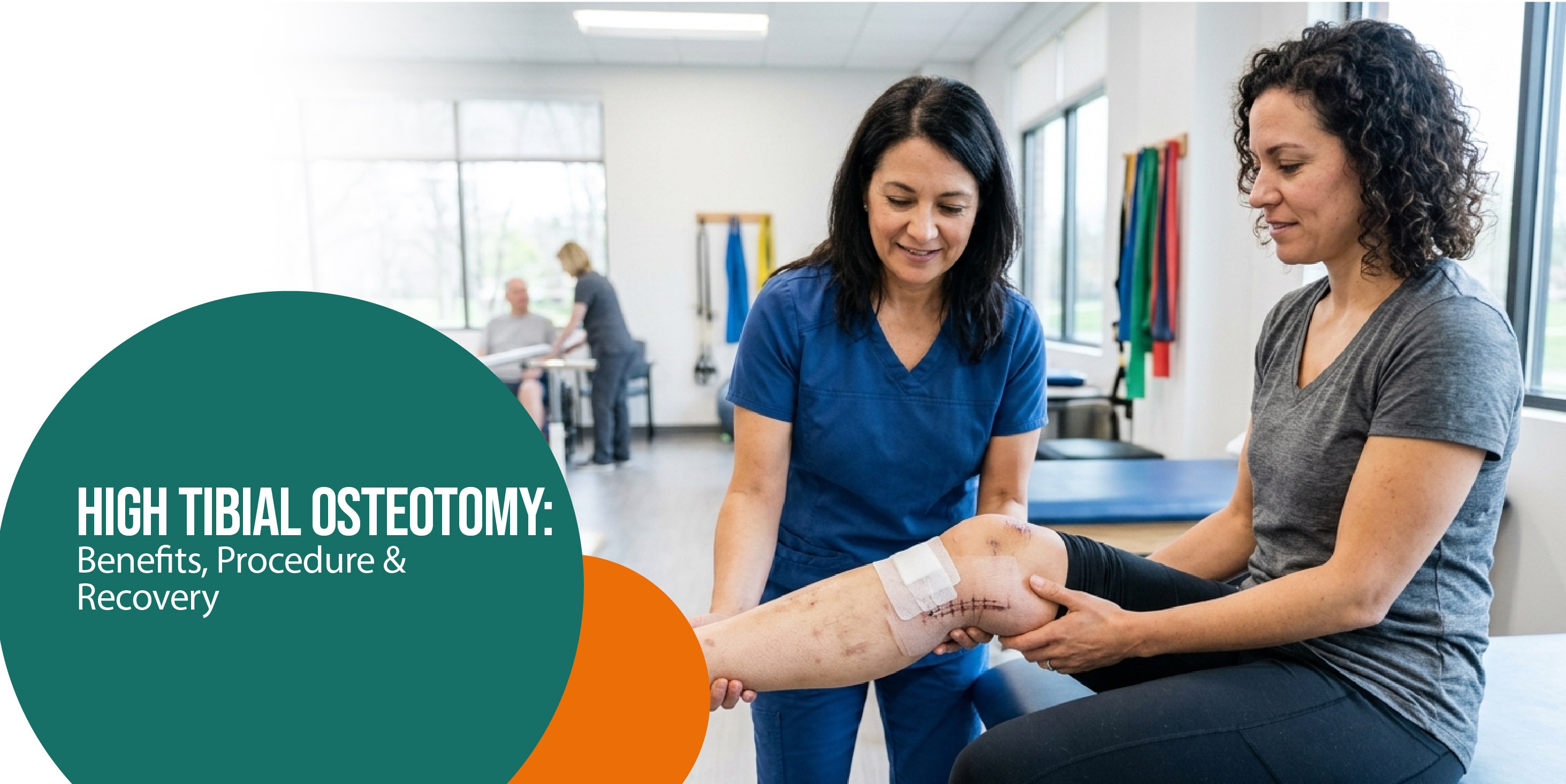
If your knee pain is mostly on one side, especially the inner side, and you're still fairly active, you have an option besides knee replacement. It's called a High Tibial Osteotomy, or HTO, and it can delay the need for a replacement by years.
It's been around for decades, but most people only hear about it from their surgeon, if at all. Here's what High Tibial Osteotomy in Gandhinagar involves, who it's right for, and what recovery looks like.
What Exactly Is an HTO?
An HTO basically corrects uneven pressure, which keeps the pain going. The surgeon makes a precise cut in the upper part of your shin bone (the tibia) and adjusts the angle slightly, shifting your weight away from the worn-out side of the knee and onto the healthier side. It's not a replacement for anything, it's a realignment. Your own knee, your own cartilage, your own ligaments. They just don't have to carry the load they were carrying before.
How Do You Know If This Is Something You Need?
Not everyone with knee pain is a candidate, and that's worth saying upfront. This procedure tends to make sense for people who fit a fairly specific pattern:
The pain sits on one side, not all over. Usually, the inner part of the knee is affected, and usually worse with walking or standing for a while.
There's a visible bow in the legs. If you or people around you have noticed your legs aren't quite straight, that's often connected to where the pressure is landing in your knee.
You've already tried the usual stuff. Physio, painkillers, injections — and none of it is giving you lasting relief anymore.
You're not ready to slow down. This tends to be the deciding factor for many patients. If you're younger, still working, and play sports, an HTO is generally a better fit than jumping straight to a knee replacement.
Why Patients Choose This Over Going Straight to Replacement
The biggest draw, honestly, is that it puts off the bigger surgery. A knee replacement is a great option when it's truly needed, but it's still an artificial joint, and artificial joints have a lifespan. If you're in your 30s, 40s, or even 50s, delaying that surgery by a decade or more is a meaningful win.
Beyond that, patients generally notice:
- - Less pain once the alignment is corrected and the pressure is no longer concentrated in one spot
- - Better day-to-day mobility — walking, climbing stairs, getting around without the constant ache
- - A joint that's still yours — nothing artificial, no replaced parts
- - The realistic chance of getting back to sports or physical activity once healing is done
What Actually Happens During Surgery
You'll be under anaesthesia for the procedure, and it takes place in a hospital, not as a quick outpatient thing. The surgeon makes a controlled cut in the upper tibia and shifts the bone into its corrected position. Once that's set, a metal plate and screws are used to hold everything in place while it heals, kind of like fixing a fracture, except this one's planned and precise rather than accidental.
The specifics — exactly how much correction is needed, which technique is used — depend on your individual knee and how it's currently aligned. That's something your surgeon will map out based on your X-rays and a physical exam, not something that's the same for every patient.
Recovery: What the First Few Months Actually Look Like
This is the part people often underestimate. An HTO isn't a quick fix — it's a process, and patience matters here.
The first few weeks are about protecting the healing bone. You'll likely be using crutches or a walker, and some swelling and discomfort during this stretch is completely normal — it's not a sign anything's gone wrong.
Physiotherapy starts early , often sooner than people expect. The goal early on is to keep the knee moving and stop it from stiffening up, while gradually building strength back.
Getting back to daily life usually happens over a few months, though the exact timeline depends on how your individual healing is progressing. Some people are back to normal routines faster than others.
Full recovery can take several months in total. The outcome really does depend on sticking with the physiotherapy plan and following your surgeon's instructions rather than rushing things.
HTO or Knee Replacement — Which One's Right?
There's no single right answer here; it really comes down to your age, how active you are, and how far the arthritis has progressed.
If you're younger and the damage is limited to one part of the knee, an HTO can offer real, lasting relief while letting you keep your natural joint. But if the arthritis has spread across the whole knee, a replacement is probably going to serve you better in the long run.
This is exactly the kind of decision worth sitting down with an orthopaedic specialist for, rather than guessing based on general information online.
Don't Let Knee Pain Decide What You Can and Can't Do
If your knee pain is concentrated on one side and it's starting to limit your daily life, it's worth exploring whether an HTO could be the right move before assuming a knee replacement is your only path forward.
Talk to an experienced orthopaedic surgeon at Aarunya Hospital and find out if it fits your situation. You can also call 8160843167 for any queries.