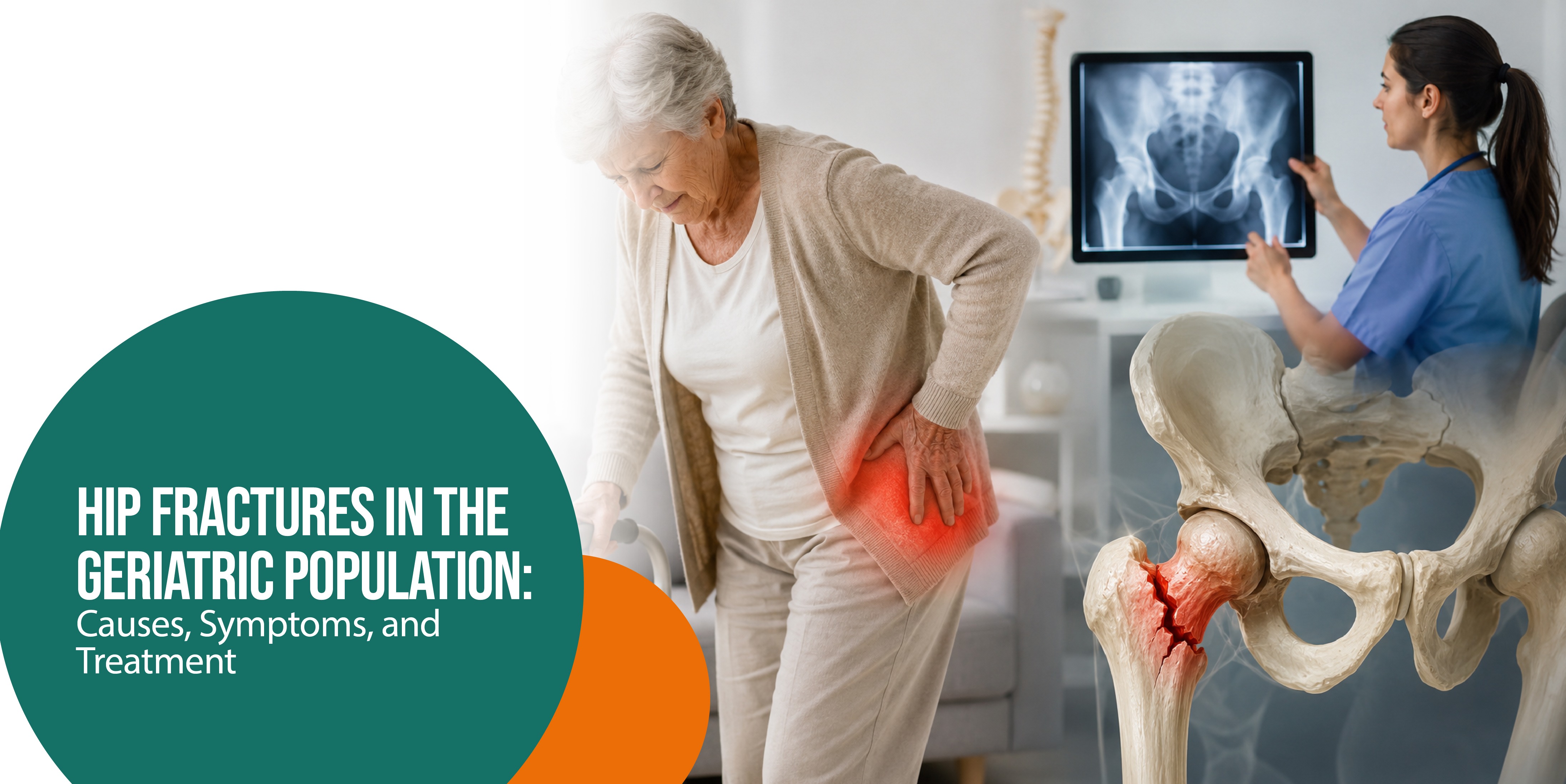
Picture this, your parents or grandparents just slipped in the bathroom. Now they are in severe pain, can’t put weight on their legs, and can’t even stand up on their own.
This happens more often than most families expect, and it is one of the scariest moments too, because a simple fall like this can actually turn out to be a hip fracture. So how can you tell if it was just an ordinary fall, or something more serious, like a hip fracture?
Here’s what matters most right now, with the right Hip Fracture Treatment in Gandhinagar , most elderly patients recover fully and get back to their feet. This guide walks you through what causes these fractures, how to recognise one, and how it’s actually treated.
What Causes Hip Fractures in the Geriatric Population?
Hip fractures in older adults do not usually come from big accidents. Most start with something as small as a fall at home, slipping while walking, or losing balance for just a second.
A Simple Fall at Home
Slipping in the bathroom or on a rug, or missing a step on the stairs, is usually all it takes. As balance and bone strength decline with age, everyday risks become genuinely dangerous.
Weakened Bones from Osteoporosis
The main cause behind most of these falls is osteoporosis. Bone strength fades quietly over the years, so much so that even a minor slip can end in a fracture, something a younger, sturdier bone would have brushed off easily.
Muscle Weakness and Balance Issues
A small trip turns into a fall much more easily when muscles are too slow to react and catch it in time.
The Role of Medications
Certain medications add extra risk — some cause dizziness that makes falls more likely, while others weaken bone density over long-term use.
Vision and Cognitive Changes
Wet floors or loose rugs are the kind of hazard that poor eyesight simply won't catch in time. Add in slower judgment and reaction times, and the risk of falling goes up even more.
Unlike younger adults, where hip fractures usually involve serious trauma , in older adults, a simple fall from standing height is often enough.
How Can You Tell If It’s a Hip Fracture?
The pain is hard to miss; sharp and intense around the hip, groin, or thigh. It usually gets worse as soon as weight is placed on that leg.
Another clear sign that something is wrong is being unable to stand or walk after a fall. The hurt leg may look shorter than the other or turned outward at an odd angle. Swelling, bruising, and tenderness around the hip area also tend to show up shortly after.
If someone falls and can't get up or put weight on their leg, don't wait it out and treat it as a medical emergency.
How Are Hip Fractures Diagnosed?
An X-ray confirms both the fracture and exactly where it sits. Older adults tend to show two common patterns.
A femoral neck fracture sits between the neck and shaft of the femur — it's one of the most common types seen in elderly patients. An intertrochanteric fracture happens just below that point, and it usually needs surgical fixation to heal properly. Knowing which type it is determines the whole treatment approach.
What Does Treatment Involve?
Surgery is needed in the vast majority of cases; non-surgical management is rarely realistic.
Internal fixation
The bone is stabilised using pins, screws, or plates. This approach is common for both femoral neck and intertrochanteric fractures.
Partial hip replacement
Replaces just the femoral head, often the better option for certain femoral neck fractures.
Total hip replacement
Both the femoral head and socket are replaced here. Surgeons reserve it for select cases where the long-term benefit clearly outweighs other options.
Hip fractures count as orthopaedic emergencies. Waiting too long raises the risk of blood clots, infection, and complications from lying immobile. Getting to surgery quickly, then getting the patient moving again early, tends to give a much better shot at recovery.
How Long Does Recovery Take for an Elderly Patient?
Recovery typically takes a few weeks to a few months, depending on the fracture, the surgery performed, and the patient’s overall health. Physiotherapy plays a major role; getting patients moving early, rather than staying in bed, is one of the strongest predictors of a good recovery.
Since osteoporosis usually causes the fracture in the first place, treating it directly alongside the fracture meaningfully lowers the risk of a second one later.
Final Thoughts
A hip fracture feels like a scary turning point, but with timely diagnosis, the right surgery, and proper rehabilitation, most patients regain real independence.
Visit Aarunya Hospital for a proper evaluation and build a treatment plan around the fracture, bone health, and recovery goals. Call
81608 43167
to book a consultation.