Reverse Shoulder Replacement Surgery
Certain daily activities can be challenging if you have shoulder pain. Even simple tasks like lifting your arm, putting on your shirt, or getting an item off a shelf can turn into painful endeavours. Sometimes doctors recommend Reverse Shoulder Replacement Surgery in Gandhinagar for individuals who suffer from severe damage and weakness in their shoulder that cannot be treated using medicines, some exercise, or other treatment options.
What is Reverse Shoulder Replacement Surgery?
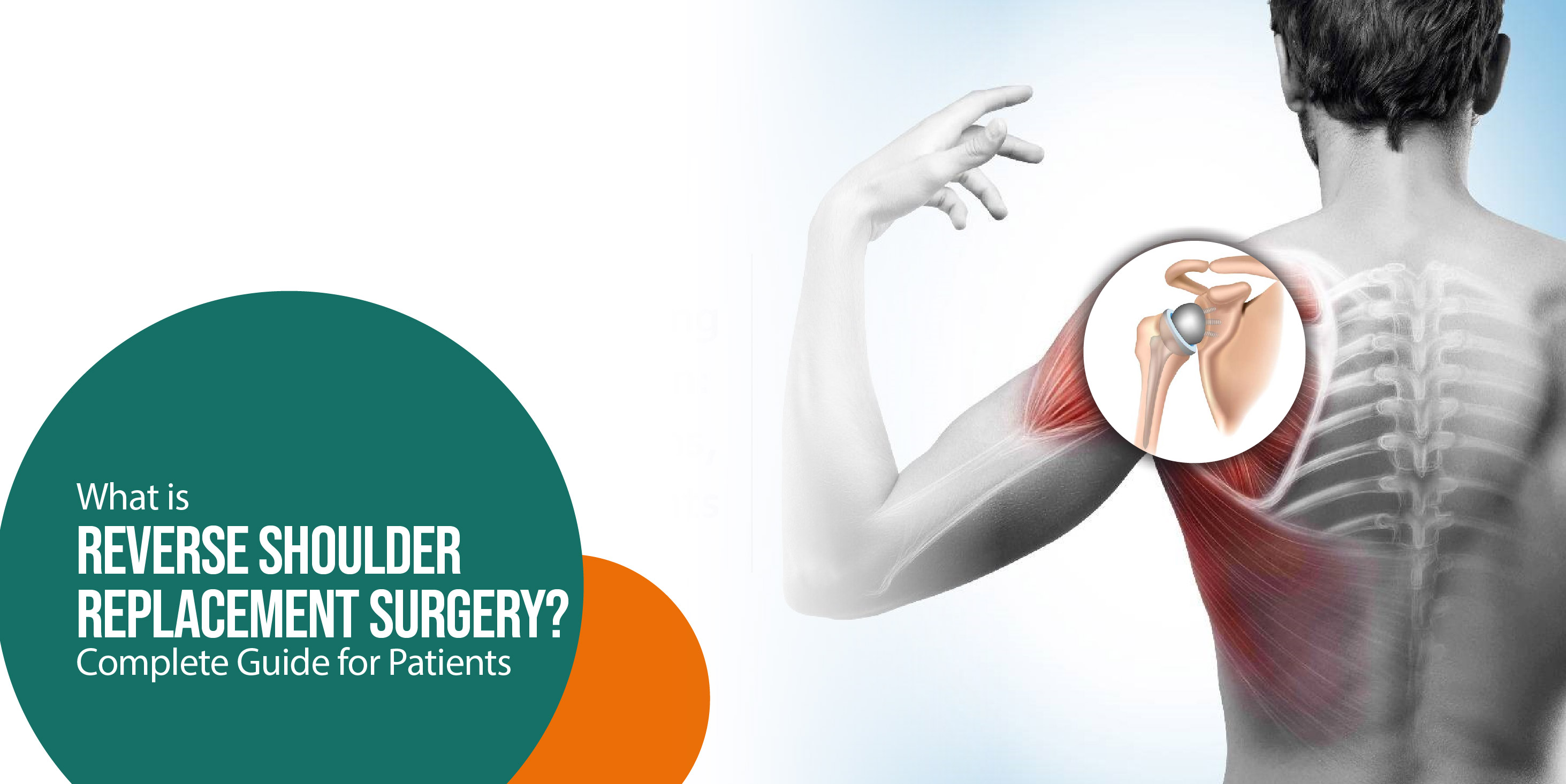
Reverse shoulder replacement is a particular type of interventional surgery for the shoulder used primarily for individuals with severe shoulder joint degeneration who have little functional rotator cuff musculature. This is not a routine shoulder replacement; this operation rearranges the ball and socket within the shoulder joint. This structure also allows other muscles, especially the deltoid muscle, to move the arm more easily.
This guide provides an overview of the procedure, who may need it, how it functions, risks involved, recovery, and expected results in non-medical, easy-to-understand language.
What Makes Reverse Shoulder Replacement Different?
In a normal shoulder replacement, the damaged ball is replaced with a metal ball, and the socket is replaced with a plastic surface.
In reverse shoulder replacement surgery, the positions are switched:
- - A metal ball is affixed to the shoulder blade.
- - A socket-shaped part is attached to the upper arm bone.
This reversed design changes the way the shoulder moves. Instead of depending mainly on the damaged rotator cuff, the surgery allows the deltoid muscle to do more of the work.
This can enhance shoulder mobility and alleviate discomfort in those with significant rotator cuff injury.
How is Reverse Shoulder Replacement Surgery Performed?
The procedure is normally performed under general anesthesia.
Step-by-Step Process
Removal of Damaged Parts
The surgeon removes the worn-out or damaged parts of the shoulder joint.
Placement of Artificial Components
The metal ball is fixed to the shoulder blade, while the socket component is attached to the upper arm bone.
Joint Testing
The surgeon checks the movement and stability of the new joint before closing the incision.The operation usually takes around two hours, although the exact time can vary depending on the patient’s condition.
Recovery After Reverse Shoulder Replacement Surgery
Recovery takes time and patience. Most people need several months to regain strength and movement.
Hospital Stay
Patients often stay in the hospital for one to three days following surgery.
Use of Sling
The arm is often placed in a sling for a few weeks to protect the shoulder.
Physiotherapy
Physiotherapy is an important part of recovery. Gentle exercises help improve movement and strength gradually.
Returning to Daily Activities
Many patients can return to light activities within six weeks, but complete recovery may take four to six months.
Possible Benefits of the Surgery
Most patients notice significant improvement after recovering.
Potential benefits include the following:
- - Reduced shoulder pain
- - Better arm movement
- - Enhanced performance on day-to-day activities
- - Increased shoulder stability
- - Better quality of life
The outcomes may vary from person to person based on their age, overall health, and the condition of the shoulder before surgery.
Who is a Suitable Candidate?
Those are suitable who have
- - Severe shoulder arthritis
- - Large rotator cuff tears
- - Long-term shoulder pain
- - Poor shoulder movement
- - Failure of non-surgical treatments
Doctors determine your eligibility for the treatment by examining scans, symptoms, and medical history.
Is Reverse Shoulder Replacement Permanent?
The artificial joint is designed to last many years, but it may not last forever. Factors that influence longevity include:
- - Age
- - Activity level
- - Bone quality
- - Overall health
Many implants function well for more than 10 to 15 years.
Difference Between Standard and Reverse Shoulder Replacement
| Standard Shoulder Replacement | Reverse Shoulder Replacement |
|---|---|
| Depends on healthy rotator cuff muscles | Uses the deltoid muscle more |
| The ball stays on the upper arm bone | Ball placed on the shoulder blade |
| Used mainly for arthritis with intact tendons | Used for severe rotator cuff damage |
| Better for normal shoulder mechanics | Better for weak or damaged shoulders |
When Should You Speak to a Doctor?
People should seek medical advice if shoulder pain continues for several months or affects daily life.
A doctor may suggest imaging tests and a physical examination to understand the cause of the problem. Surgery is usually considered only after other treatment methods do not provide enough relief.
Conclusion
Most of the patients coming for reverse shoulder replacement surgery would have been suffering from chronic pain and range of motion issues. Aarunya Hospital has been offering high-quality surgery for many years. You can visit their hospital or call 8160843167 for more information. Although it can take time for healing to occur, the procedure may increase comfort, function, and independence in selected patients.
Being knowledgeable about the surgery, recovery process, benefits, and risks allows patients to make shared decisions with their doctor.