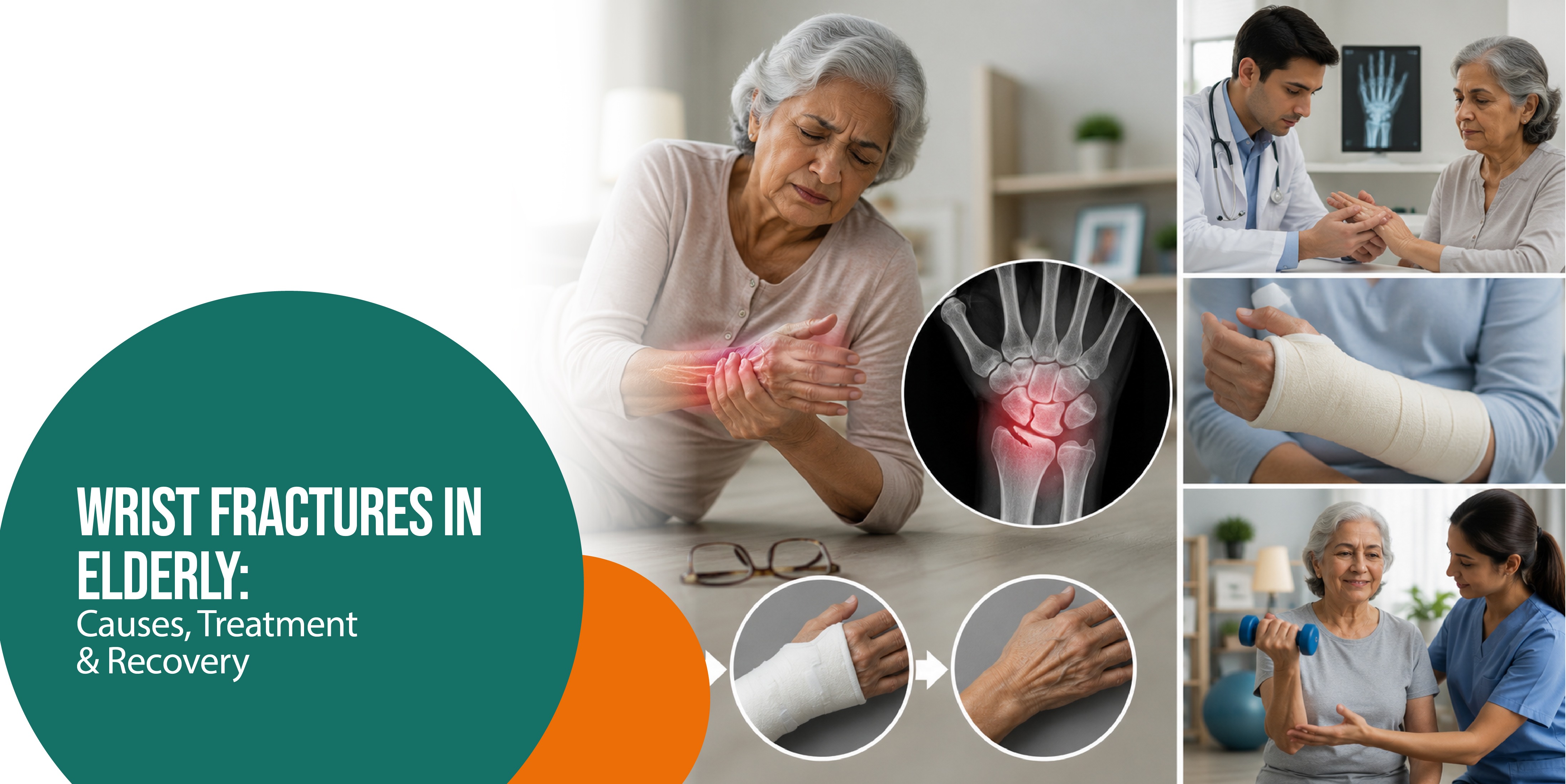
A fall that looks minor at first can
still turn into a serious wrist injury, especially for older adults. Bones
naturally lose strength with age, so even a simple slip can be enough to cause a
break. If you or someone in your family is looking into
Wrist Fracture Treatment in Gandhinagar , getting care
early really does make a difference to how well the wrist heals, how much pain
is involved, and how it functions long-term.
Why Are Wrist Fractures So Common
in Older Adults?
A wrist fracture is simply what happens
when one or more of the bones around the wrist break. In older adults, it's
usually tied to bone strength naturally declining with age. The most common
cause by far is a fall onto an outstretched hand.
A few things tend to raise the
risk.
- - Osteoporosis or low bone density
- - Poor balance or muscle weakness
- - Slippery floors and uneven surfaces
- - Poor eyesight
- - Certain medications that cause dizziness
- - Previous fractures
Even a fall from standing height can
result in a fracture if the bones are already weak.
Common Signs You Should Never
Ignore
A wrist fracture won't always look like
a big deal right away. People mistake it for a sprain more often than you'd
think, and that's usually what delays treatment.
Keep an eye out for:
- - Sudden pain after a fall
- - Swelling around the wrist
- - Bruising
- - Difficulty moving the wrist or fingers
- - Visible deformity
- - Weak grip strength
- - Tingling or numbness in the fingers
Any of these after a fall, don't wait
around. Get it checked.
Different Types of Wrist
Fractures
Not every wrist fracture is the same
kind of injury. The specific type is actually what guides the doctor toward the
right treatment.
Distal Radius Fracture: This is the most common wrist fracture seen in elderly patients. It involves the larger forearm bone, right near the wrist.
Ulna Fracture: Sometimes the smaller forearm bone breaks too, alongside the radius.
Stable Fracture: The bone stays in its normal position, and this type usually heals fine with immobilisation alone.
Displaced Fracture: Here the bone's actually out of place, not just cracked. That usually means reduction, sometimes surgery, to get it sitting right again.
Open Fracture: The bone actually breaks through the skin. This is classified as a medical emergency and requires quick treatment.
Treatment Options for Wrist Fractures
The right treatment comes down to the patient's age, bone quality, the specific fracture pattern, and how active they are.
Non Surgical Treatment
A lot of stable fractures heal perfectly well without any surgery at all.
Treatment may include:
- - Wrist splint or cast
- - Pain management
- - Ice application during the early phase
- - Regular follow-up X-rays
- - Physiotherapy after cast removal
Surgical Treatment
Not every fracture needs this, but some do, mainly to get the wrist properly realigned.
Your orthopaedic surgeon may recommend:
- - Wrist splint or cast
- - Plate and screw fixation
- - Pins or wires
- - External fixation in selected cases
With newer surgical techniques, patients often start moving the wrist sooner, and tend to recover better function overall.
Looking into Wrist Fracture Treatment in Gandhinagar? Go with someone experienced. That is the difference between treatment tailored to your specific fracture and treatment that is applied in the same way regardless of who walks in.
Recovery Timeline After a Wrist Fracture
No two people heal at the same rate.
Still, here's roughly what most patients go through.
Roughly speaking, pain and swelling start easing off within the first one to two weeks. Bone healing itself kicks in around four to six weeks in, and that's usually about when the cast comes off too. Strength and mobility keep building over the next two to three months, and for some patients, full recovery isn't complete until around the six-month mark.
Throw osteoporosis or diabetes into the mix, and healing tends to stretch out a bit longer.
Final Thoughts
Don't brush off a wrist fracture in an older adult, ever. Catch it early, treat it properly, and follow through on rehab, and movement usually comes back with less risk of long-term trouble. Cast or surgery, it doesn't matter which, timely care is what actually gives someone their best shot at staying active and independent. Need an expert opinion for yourself or a family member? Call 8160843167 and get advice from Dr. Viraj Patel at Aarunya Hospital, which builds orthopaedic care around whatever that specific patient actually needs.